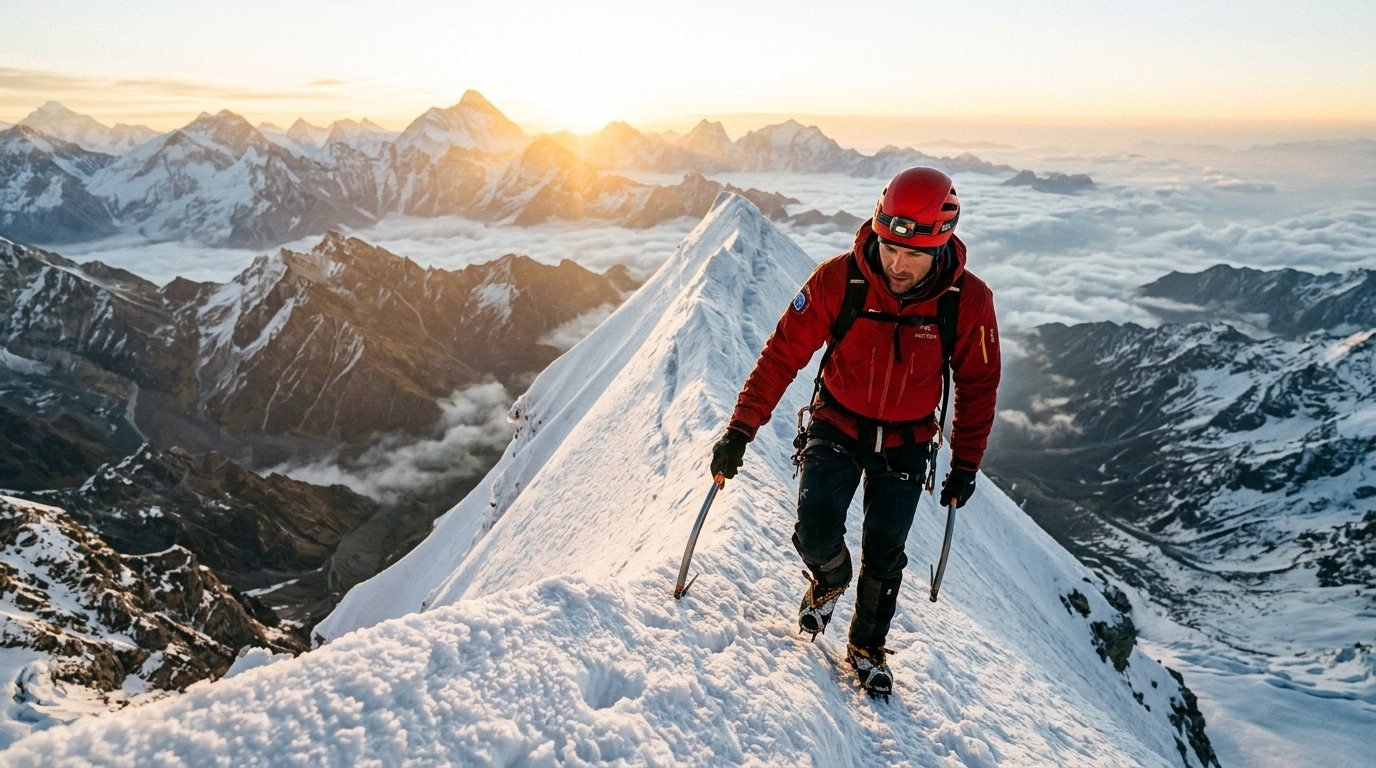
Stepping above the 6,000-meter (19,685 ft) contour is a transformational milestone in every mountaineer’s journey. At this altitude, the atmospheric pressure drops to less than half of sea level, and your body must adapt to functioning on roughly 48% available oxygen.
Why Start with a 6,000M Peak in India?
India's trans-Himalayan regions—primarily Ladakh, Spiti, and Lahaul—offer some of the most accessible and safety-engineered 6,000m peaks in the world. Unlike technical 8,000ers requiring months of siege climbing, peaks like Mt. Yunam (6,111m) and UT Kangri (6,070m) allow trekkers with solid fitness and basic snow-craft training to experience true semi-technical alpine climbing.
Top 3 Non-Technical 6,000ers for Beginners:
- 1Mt. Yunam (6,111m, Lahaul/Ladakh Border): Approached via Keylong and Bharatpur, offering a non-glaciated scree and snow ridge with majestic views of CB ranges.
- 2UT Kangri (6,070m, Rumtse, Ladakh): An ideal winter or summer climb in the Rongo valley with accessible base camps.
- 3Kang Yatse 2 (6,250m, Markha Valley): A classic glaciated dome requiring rope team coordination, crampon navigation, and high camp strategies.
The 12-Week Physical Conditioning Regimen:
- Zone 2 Aerobic Base (4x Weekly): 60-90 minute incline treadmill walks with a weighted backpack (10-15 kg) or outdoor trail running.
- Eccentric Leg Strength (2x Weekly): Weighted lunges, step-ups, Bulgarian split squats, and calf raises to build descent durability.
- Core & Breathing Economy (3x Weekly): Planks, bird-dogs, and diaphragmatic breathing drills.
Gear Essentials You Cannot Compromise On:
- Footwear: B2/B3-rated semi-rigid or rigid mountaineering boots compatible with semi-automatic steel crampons.
- Layering System: Merino wool base layer, 200g fleece mid-layer, windproof hard-shell, and an 800+ fill power down jacket tested to -25°C.
- Glacier Rigging: CE/UIAA certified climbing harness, screw-gate carabiners, prusik cords, and a classic walking ice axe (55-65 cm).
Always climb with certified instructors who maintain a strict 1:2 or 1:3 climber-to-guide ratio on summit night.